Segmentation
Stop firing in every direction. Learn to segment.
Apr 12, 2025
Read nowGood marketing pays for itself and turns a profit. The rest is talk.
Zé Paulo Gomes September 21, 2026 8 min read

Plenty of agencies out there sell vanity and burn the cash of people who cannot afford to throw money away. That is guru behavior, not serious work.
The first time I saw one of those gurus up close was at the print shop where I worked. The man wore odd clothes, carried an air of superiority and spoke slowly, as if every word were a great revelation. What stayed with me from that meeting was not his strange appearance, but watching a successful business owner consult him on every small decision: which color to use, how much to charge, which finish to pick.
That dependence turned into a business model. Today the stage is digital, the guru became a mentor of mentors, and the bill arrives every month as a subscription.
The ready made package they push onto small companies is almost always the same:
Wake up, business owner! An audience can be bought. Preference and loyalty cannot.
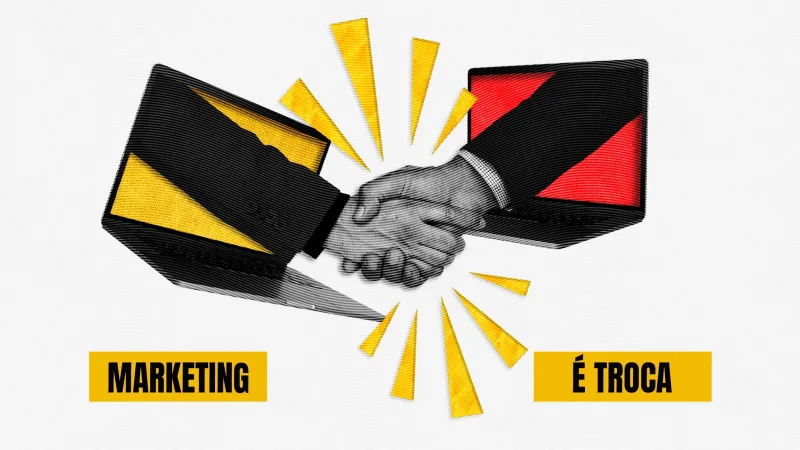
Many owners confuse marketing with promotion. Promoting is a single action of advertising, which is part of the promotion pillar and answers to a business goal. Marketing is an exchange: you have what the customer is looking for, they hand over the money, and both sides win.
The sale is the instant of that transaction, the exact moment the money changes hands. Marketing prepares the ground before and holds the relationship together afterwards.
You can have an excellent product, but with no visibility the exchange never happens. You can charge the fairest price around, but with no perceived value the negotiation stalls. You can give impeccable service, but in the wrong location the sale dies. Product, price, place and promotion have to move together. Whoever sells you promotion alone is handing over a quarter of the work and charging for the whole.
Reach, impressions and engagement do help you understand how the audience behaves, but none of those numbers walks up to your counter with a name, a phone and a card in hand. The owner who measures the month by follower count finds out too late that an audience alone does not become revenue.
Three numbers are worth more than the whole report: how much it cost to bring in each customer, how much that customer left on the first purchase and how many of them came back.
When the cost of acquisition sits above the margin of the product, the campaign is renting attention and handing back a loss. You sell more and pay to work.
Paid traffic accelerates whatever already exists. If the price is wrong, the ad multiplies the loss. If the service is slow, it brings more people into the queue. If the promise is confusing, the campaign spreads that confusion to more people in less time.
Before you open the tap on the budget, settle the basics: what you sell, who you sell to, for how much and at what margin. With that standing, the ad accelerates what deserves to be accelerated.
Marketing exists to help a person notice a problem, understand that it matters and see ways to solve it. Trying to sell before that is interrupting someone else's day.
Think of the salesperson who barely listens and already pushes the most expensive item in the shop. The parking hustler who charges you upfront for a public street. The beach vendor who approaches you every five steps. All of them offer at the wrong moment, and the reaction of the person being interrupted is never to buy. It is to frown, walk faster and say they are not interested.
A badly calibrated campaign does exactly that, except it pays for every interruption. That is where so many "no" answers come from. The customer even had the problem, but the offer arrived before its time.
A business that builds no trust has to sell every day the way it has to breathe. It chases new customers, spending more energy, more time and more money every month.
A business that builds trust creates a base. The customer comes back, refers you and defends your name when you are not in the room. That loyalty comes from the match between what you promise and what you deliver. Replying fast on WhatsApp helps, being polite helps, sending a birthday message helps, and none of it holds anyone when the agreement is broken.
A logo and a tidy feed are packaging. The real brand is memory: what stays after the service, the answer the customer gives when someone asks whether you are worth it. If the memory is good, the cycle repeats without you paying for it again. If it is bad, the link breaks.
Before approving any budget, know how much your company costs per day and per hour worked. Without that number you have no way to judge whether a campaign pays off.
Then do the math on the real sales effort. The average conversion rate in Brazil sits around 6% for services and 3% for products. If the target is twenty service sales in a month, you need to generate more than three hundred qualified conversations on WhatsApp or at the counter. Seen that way, it becomes clear why the promise of reaching thousands for pennies never closes the account: reach does not turn into conversation on its own, and a conversation still has to turn into a sale.
Anyone proposing an investment without mentioning price, margin and break even is guessing with your money.
The last question sinks a lot of proposals. Whoever only wants to sell media runs from it, because the honest answer usually postpones the ad and, with it, the monthly fee.
While managers at multinationals spend millions on market research, you stand side by side with the people who buy, feel and decide every day. That closeness is the biggest advantage a small business has.
Use your own product. Eat at your competitor's restaurant. Ask them for a quote and see how they treat you. Ask the customer who just paid why they chose you. None of that costs a subscription. It costs initiative, method and genuine interest in the other person, and it gives back more useful information than most of the reports going around.
A large company can afford six months of testing until it gets the hand right. You cannot. A monthly fee that eats the margin of the month has to give back orders at the till, not compliments on the design of a post. A serious professional shows the math, accepts being measured and tells you when the problem is inside your own company.
Ask for the number. Always.
Oficina DIGIT@MEI
You can have both for free: Encontre um MEIo on this site and the workshop in partnership with SEBRAE Alagoas, Sergipe, Pará and Tocantins.