
Branding
Branding with no eye on sales is just vanity
Sep 21, 2026
Read nowA brand that pays attention to what people feel, want and value does not have to join the price war.
Zé Paulo Gomes April 1, 2024 4 min read
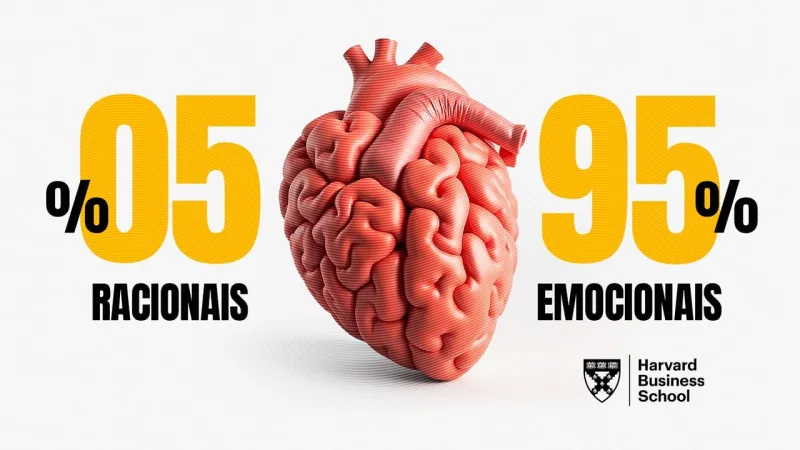
Picture the scene: you have to buy a gift for a secret santa and you have no idea who the person is. You do not know what they like, need or truly value. Hard, right? Now think about this: if buying a gift for a stranger is already complicated, imagine creating a product or a brand without understanding the people who will buy it.
Creating with empathy is not self help fluff. It is a strategy that costs little and is worth a lot. You know that meal you had at a restaurant and wanted to go back to the following week? That car you test drove and kept thinking about for days? That service that makes you always look for the same company or the same person? That is empathy.
It is not advertising. It is not luck. It is a real experience connecting people through something true. And whoever creates those experiences does not have to be the cheapest in the window to stand out. Whoever delivers an honest feeling stays out of the price war. They create desire. They create loyalty. They create a living brand.
What if brands could see the world through people's eyes? That is the power of empathy.
In everyday use, empathy is understood as respecting other people's feelings, or putting yourself in someone else's shoes. In the dictionary it can also mean the ability to grasp the meaning of an object, usually a work of art such as a painting or a sculpture.
In psychology it is a tool for interpreting human behavior and emotion. In sociology it is how a person understands the social self through three lenses:
The word itself comes from the Greek empatheia, carrying the sense of passion. That word could be the key to everything here, since winning people who feel passion should be the biggest goal any organization has.
What holds many companies back is exactly this: managers focused too hard on the numbers end up ignoring the effect empathy has on the business.
In the book Empathy (2017), published by Harvard Business School, Daniel Goleman presents the concept of the empathic triad, split into three dimensions:
Those three forms, emotional, cognitive and compassionate, work as invisible tools that let people listen with more than their ears, see with more than their eyes and connect for real. If people can develop those skills, brands can too.
Brands can also apply the empathic triad to see themselves, their competitors and their customers with more depth.
First, seeing yourself through what people think:
Second, seeing the competitors through what people think:
Third, seeing people through their own eyes:
Brands with an empathic posture harvest results beyond the financial ones. They are loved, they are valued and they win both the mind and the heart. Empathy is not only what the market is looking for. It is what makes brands more human, and that may be what the world actually needs.
Oficina DIGIT@MEI
You can have both for free: Encontre um MEIo on this site and the workshop in partnership with SEBRAE Alagoas, Sergipe, Pará and Tocantins.