Branding
Branding with no eye on sales is just vanity
Sep 21, 2026
Read nowAn archetype can be used as a lens. Never as a disguise.
Zé Paulo Gomes April 29, 2025 8 min read
When The Hero and the Outlaw came out in 2001, brand marketing was a different animal. Communication was still the privilege of a few. Brands spoke, consumers listened. We were at the end of the one way message era and at the start of the first shy interactions in digital communities. Marketing was made by whoever controlled the narrative. In that setting, the archetype worked.
It worked because it helped build a strong, recognizable symbolic personality. It was a lens through which the brand could be seen. It made sense to use an archetype to set the tone, the speech and even the design. Consistency came from seeming to be.
Then time passed. The network era arrived.
Today brands are not what they say they are, they are what they do. They are what they deliver, what they stand behind, what shows through in their acts when the words fail. Wake up, business owner. However hard a brand works to project a given image, it is the customer who decides what it is and what it means.
That is why the archetype has become a risk today. Not because the concept is bad, but because it is an excellent solution for a market and a consumer that no longer exist.
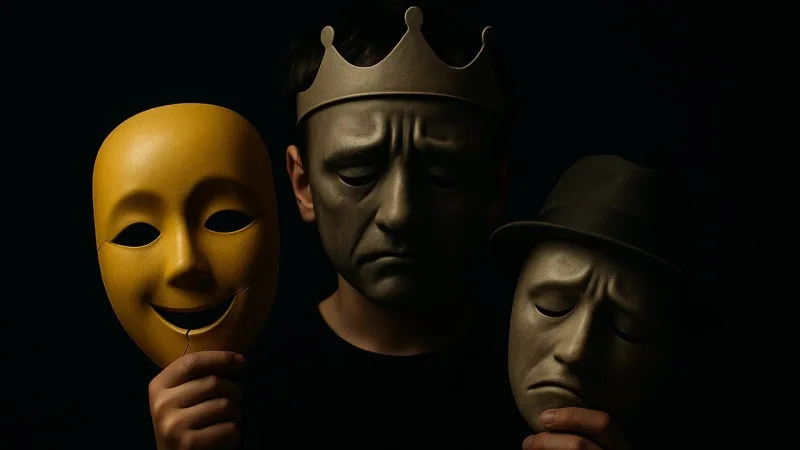
The archetype became the mask many brands wear when they are not yet brave enough to be themselves.
Is it useful? Of course. Because it sells. It sells like Don Juan, though: until the first night. Once the presence takes over, the mask falls and what remains is the truth. Today's customer sees inside. If you are a character, they will notice.
Carl Jung never drew the 12 brand archetypes. What he offered was deeper: the idea that universal symbolic forms live inside us. Images that rise from the collective unconscious and shape our behavior, our narratives, our dreams and our myths.
Jung's archetypes are expressions of the human soul. They are not ready made labels, they are forces that cross cultures, religions and eras. They show up in folk tales, in religious symbols, in the stories that repeat generation after generation. They speak to what moves us, even when we cannot explain it.
Branding drank from that source. And simplified it too far. Margaret Mark and Carol Pearson translated that symbolic universe into the world of brands, organizing the 12 archetypes we know today. It was a great contribution. It was not a faithful translation of Jungian complexity.
An archetype can be a good communication tool. It can help express values, align the language, create unconscious empathy. It should never be mistaken for identity. An archetype is a mask. It is a character the ego puts on to feel stronger, more desirable or more accepted. In personal life that helps us survive. In branding it helps us sell. But if the brand has no essence, it becomes hostage to the mask. That does not hold.
You can look daring as the Outlaw. You can look trustworthy as the Caregiver. You can look transformative as the Magician. If your delivery does not hold the character up, the theater does not last.
The Innocent wants to live in harmony with the world. It dreams of a lighter tomorrow, where people trust each other. Its marketing is clear, warm, gentle. Dove and Natura do it well. The Innocent risks naivety, denying the complexity of the world in the name of an artificial peace. Real hope is the kind that faces reality and still chooses the light.
The Explorer cannot stand ready made destinations. It wants its own paths, torn maps, authentic decisions. Brands like Jeep and The North Face invite you to the road, not to comfort. The shadow of the Explorer is isolation. An obsession with freedom can turn into running from bonds, from community, from responsibility.
The Sage seeks the truth. Truth with no empathy in it turns into arrogance. TED, Google and National Geographic are good examples of brands that teach. The true Sage steps down from the pedestal. Wisdom is only complete when it serves life, not only the intellect.
The Hero is driven by pain, by discipline, by effort. It does not celebrate the victory. It celebrates the fight. Nike translates that perfectly: "Just do it" is not a slogan, it is an internal call. The Hero can get lost in the cult of performance. It can turn into a machine. The true Hero is the one who defeats himself first.
The Outlaw does not only want to break rules. It wants to bring down unfair systems. Harley-Davidson, Diesel and Netflix flirt with that energy. With no cause, the Outlaw is just noise. Relevance needs direction.
The Magician transforms. It creates possibilities. It sells the future. Apple, Disney and Airbnb promise enchantment. The risk of the Magician is illusion. Selling magic and delivering bureaucracy destroys trust at the root. Real magic is quiet. It happens when the promise is held up by the experience.
The Lover does not sell products. It sells atmosphere. Chanel, Häagen-Dazs and Victoria's Secret create desire through the way they wrap you up. The Lover can turn shallow if it seduces through looks alone. Real love lives in the emotional touch, not in the packaging.
The Jester is the only one who can laugh at the crown and walk away alive. It says the truths nobody else dares to say. Netflix, Skol and Mercado Livre use humor with intelligence. The risk of the Jester is becoming a party clown. Funny and irrelevant. The true Jester laughs and plants a thought in the wound.
The Caregiver gives itself away. It serves, protects, supports. Brands like Unimed, Amil and Natura care through presence. A Caregiver who forgets itself loses its power. Caring requires a limit. Whoever cares without self preservation disappears.
The Ruler offers order. Not to show off. To lead. Mercedes-Benz, Rolex and IBM hold excellence with a firm hand. The true ruler inspires without demanding and is respected without shouting. It can slip into arrogance. The greatness lies in including without losing the grip.
The Creator sees the world as raw material. To imagine, create, invent and make the new again. Lego, Adobe and Behance build singular experiences. The Creator can get lost in its own reflection. Creating only for yourself is vanity. The real work transforms when it meets someone else.
Archetypes were never the problem. The problem is a brand using them as a costume to look like something it is not yet. When the archetype comes from the truth of the brand, from what it already is, delivers and represents to people, it becomes a powerful tool of symbolic expression.
A company with a validated method, consistent results, a solid history and recognized leadership can take on the Ruler archetype. Because there is legitimate authority behind the posture. That is not arrogance. It is maturity. In that case the archetype is not covering a weakness. It is translating a reality.
In the same way, brands born to challenge an outdated model, break an inefficient system or offer a new look at an old problem can draw on the energy of the Outlaw. Provoking is not enough. Talking tough in the feed is not enough. There has to be a cause. There has to be delivery. There has to be a soul.
The Magician works when the brand truly transforms people's lives. When the customer experience is almost ritual, revealing, out of the ordinary. Brands like Apple or Disney do not sell illusion. They sell a promise that comes true. The magic is in the delivery.
The Lover only works when the brand takes real care of the sensory experience. When the packaging moves you, the service welcomes you, the detail delights you. If all of that is superficial, the archetype collapses. When it is lived, the connection happens at the first touch.
The Explorer also has to be more than a backpacker in the copy. It has to be present in the way the brand builds autonomy, creates versatile products, gives the customer room to experiment without fear. Freedom with no responsibility is just disorder. Freedom with structure is a revolution.
Applied well, archetypes help give shape to the truth of the brand. Used as a character, they demand a performance that never holds up. Because in the end we can only sustain what we really are.
Today brands cannot lean on characters. The world is too fast, too transparent and too demanding to hold a costume in place. The archetype can be used as a lens. Never as a disguise. In the presence of people the mask falls. What is left is what the brand built through its acts, not what it said it was.
Oficina DIGIT@MEI
You can have both for free: Encontre um MEIo on this site and the workshop in partnership with SEBRAE Alagoas, Sergipe, Pará and Tocantins.